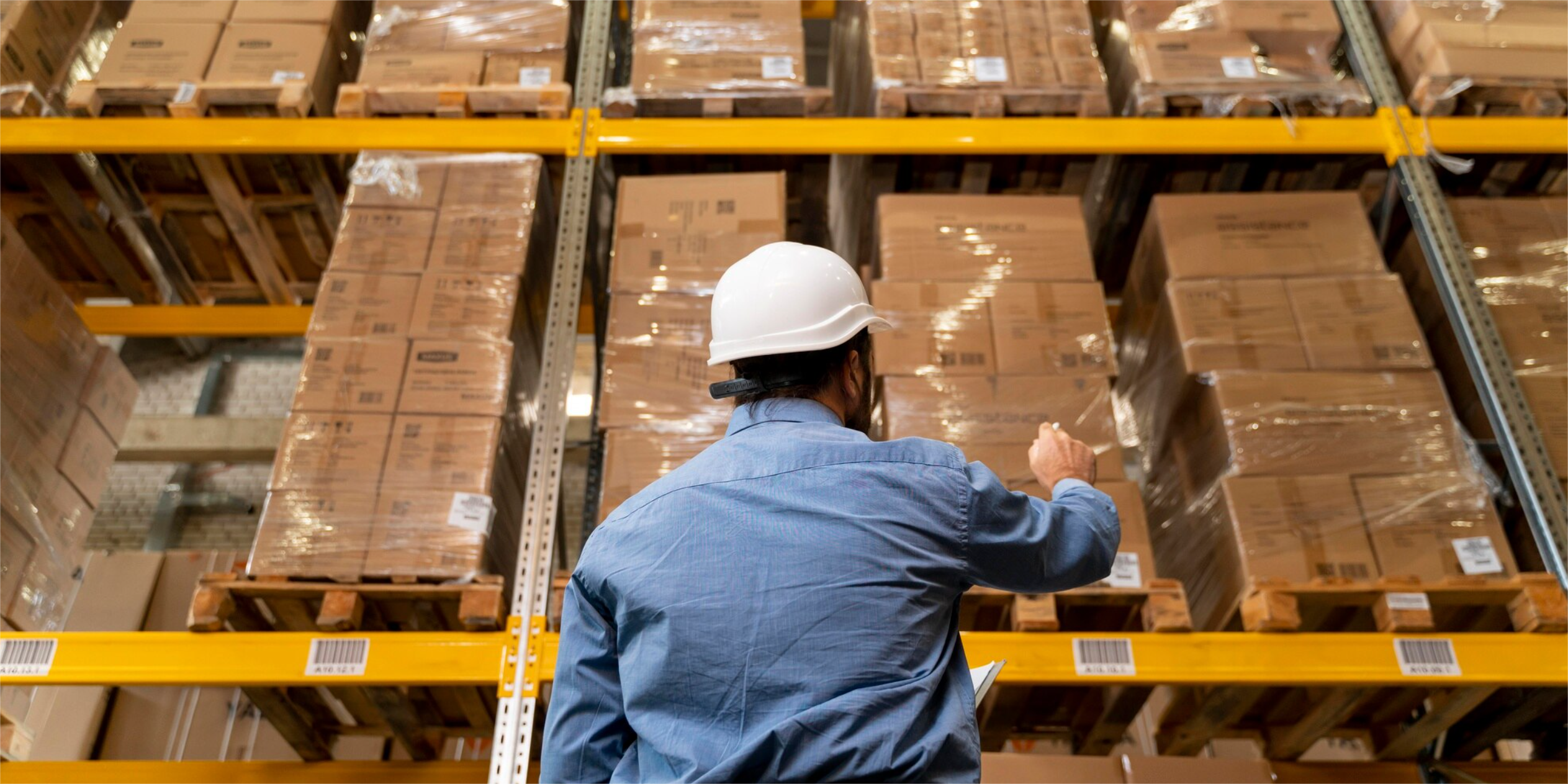

The Mexican logistics industry is undergoing a profound transformation, with the traditional concept of warehousing evolving into smart ecosystems that integrate advanced technology, predictive analytics, and automation. Warehouses are no longer just storage facilities; they have become vital centers where every square meter, every movement, and every decision is optimized using accurate data and continuously learning systems.
This revolution responds to an undeniable reality: Mexican companies face simultaneous pressures from rising operating costs, limited urban space, accelerated delivery demands, and consumer expectations that demand instant availability. Smart storage is a necessary condition for maintaining profitable operations in today's landscape.
The figures document this urgency. According to industry projections, by 2025 more than 60% of new logistics developments in Mexico will incorporate some level of automation, while the adoption of Warehouse Management Systems (WMS) continues to expand with 74% of operators planning to implement or modernize these platforms in the next three years. This technological transformation is redefining how companies manage inventory, optimize space, and respond to fluctuations in demand.
The evolution from traditional wineries to smart centers
Traditional warehouses operated under paradigms that are now unsustainable: products stored according to space availability, manual picking processes with high error rates, physical inventories that took days to complete, and decisions based on accumulated experience rather than systematic data analysis. This model worked for decades when storage costs were relatively low and delivery windows were measured in weeks.
The current landscape demands fundamentally different responses. Modern operations process thousands of SKUs with variable turnover rates, manage orders that combine deliveries to physical stores, homes, and pickup points, and must maintain complete real-time inventory visibility while minimizing capital tied up in stock. This operational complexity far exceeds the capabilities of systems based on tacit knowledge or manual processes.
The transformation toward intelligent warehousing integrates three complementary dimensions. First, technological infrastructure that provides total visibility and immediate responsiveness. Second, analytical methodologies that convert historical data into predictive decisions about location, replenishment, and flow optimization. Third, selective automation that eliminates repetitive, low-value tasks while freeing up staff for activities that require human judgment.
Fundamental technologies that enable operational intelligence
Warehouse Management Systems (WMS) represent the central brain that coordinates all operations within the storage space. These platforms go beyond the concept of "inventory software" to become comprehensive systems that manage receiving, storage, replenishment, picking, order preparation, and dispatch under a unified logic. A modern WMS processes millions of transactions daily while optimizing picking routes, suggesting strategic locations for each product, and maintaining complete traceability from receipt to final delivery.
The capabilities that distinguish an advanced WMS include dynamic location management that reassigns products based on updated turnover patterns, optimization algorithms that group orders to minimize travel, integration with enterprise systems (ERP) that synchronizes physical inventory with accounting records, and generation of operational metrics that quantify efficiency in real time. Companies that have implemented WMS report 30% increases in inventory accuracy and 40% reductions in picking errors.
Physical automation complements software intelligence. Automated Guided Vehicles (AGVs) and Autonomous Mobile Robots (AMRs) transport products between areas of the warehouse without human intervention, dynamically optimizing routes based on congestion and priorities. Automated storage and retrieval systems (AS/RS) maximize storage density by utilizing vertical spaces that would be inaccessible with conventional equipment, increasing capacity by up to 85% within the same physical structure.
The Internet of Things (IoT) adds a layer of environmental intelligence through sensors that monitor temperature, humidity, location, and conditions of sensitive products.
This sensorization is critical for industries such as food, pharmaceuticals, and electronics, where minimal deviations in environmental conditions can compromise product quality. The data generated by these sensors feeds early warning systems that prevent deterioration and enable corrective interventions before material losses occur.
Artificial intelligence elevates these capabilities to a predictive level. Machine learning algorithms analyze historical demand patterns to anticipate replenishment needs, identify anomalous behaviors that could indicate fraud attempts or systematic errors, and optimize resource distribution by predicting future workloads. This predictive capability transforms reactive operations into proactive strategies that anticipate problems before they impact service levels.
Smart Slotting: The Science of Strategic Placement
Smart slotting exemplifies how data analysis transforms fundamental operational decisions. This methodology assigns specific locations to each product based on multiple simultaneous variables: historical turnover, physical dimensions, weight, compatibility with other products, seasonality, and ordering patterns. ABC classification is the fundamental principle whereby high-turnover products (Category A) occupy immediately accessible positions, moderate-turnover products (Category B) are located in intermediate areas, and low-turnover products (Category C) are stored in less frequently accessed areas.
The results of well-implemented slotting are quantifiable and consistent. Operations that have adopted data-driven methodologies report reductions of 15-25% in operating costs by decreasing distances traveled during picking, speeding up order preparation, and minimizing selection errors. A leading distribution center in the personal care industry in Mexico, with an operational capacity of 100,000 square meters processing more than 132,000 pallet positions, documented a 15% reduction in operating costs and a 25-30% improvement in processing speed after implementing advanced slotting strategies.
Dynamic slotting overcomes the limitations of the static approach through continuous revisions based on real-time data. Systems constantly monitor performance metrics such as picking times per location, actual access frequency, and changes in demand patterns. When a location's performance degrades, the system generates alerts and recommends adjustments before they impact overall efficiency. This ability to continuously adapt is critical for products with high demand variability due to promotions, launches, or market trends.
The integration between slotting and demand forecasting enables proactive relocations. For products with predictable seasonal demand, systems schedule automatic movements weeks before periods of high activity. This synchronization between prediction and location eliminates inefficiencies typical of operations that react to changes rather than anticipate them, maintaining operational efficiency even during peaks in activity.
Documented transformations in world-class operations
A logistics operator specializing in mass consumption with facilities of approximately 3,000 square meters implemented dynamic location systems that adjust positions according to seasonal demand patterns. Products in this industry face peaks related to holiday seasons and specific promotions.
The implemented system incorporates predictive models that relocate high-turnover products to main picking areas weeks before periods of high demand, anticipating increases in volume without expanding physical infrastructure.
This dynamic adaptability made it possible to maintain superior service levels during peak activity periods with the same physical facilities. Operational metrics show a reduction in order preparation times and improved delivery punctuality during critical seasons. The implementation demonstrated that intelligent optimization overcomes physical limitations by making better use of existing resources.
A global company specializing in direct sales of various products with a 3,000-square-meter operation presents a particular challenge: high SKU diversity with significant variability in dimensions, weight, and storage characteristics. The slotting strategy implemented segments inventory not only by ABC rotation but also by product families with similar handling requirements. Fragile products are grouped in areas with special protection, heavy items are placed on lower levels for safe handling, and high-turnover products are located in immediately accessible locations.
The results include reduced damage during handling, improved picking accuracy, and shorter training times for operational staff. Standardizing locations by product family simplifies processes and reduces the learning curve, allowing new staff to reach standard productivity in less time.
What is smart storage in Mexico?
Smart warehousing in Mexico integrates Warehouse Management Systems (WMS), robotic automation, predictive analytics, and dynamic slotting to optimize every available square foot. It reduces operating costs by 15-25% through data-driven decisions on location, replenishment, and workflows, transforming traditional warehouses into nerve centers that respond in real time to fluctuations in demand with complete inventory visibility.
Trends that consolidate the future of the Mexican logistics sector
The consolidation of the Mexican logistics market accelerates the adoption of advanced capabilities. Theories become reality in operations that combine scale, technology, and operational expertise. The Mexican market has witnessed significant strategic moves that concentrate capabilities and accelerate technological transformation. One documented example is TRAXION's acquisition of Solistica, consolidating more than 70 years of operational expertise with infrastructure that manages more than 1.4 million tons annually.
This consolidation enables investments in technology that fragmented operators would find difficult to sustain individually. The combined scale—more than 1.2 million square meters of 3PL storage, more than 21,000 employees specializing in logistics operations, and more than 10,900 units in its own fleet—enables technological implementations that require significant investments in WMS, automation, and predictive analytics. The asset-light strategy, currently accounting for 45% of consolidated revenue and projected to exceed 50% by 2026, demonstrates operational flexibility that allows for rapid adaptation to technological changes without tying up excessive capital in fixed assets.
Technological trends for 2025 include total autonomous robotization, where systems make operational decisions without human intervention, generative AI for warehouse design that optimizes layouts by considering millions of scenarios simultaneously, and centralized management platforms with dashboards that provide real-time visibility of geographically distributed operations. The articulation between physical storage and cloud data storage enables analyses that were previously impossible due to computational capacity limitations.
Sustainability is integrated as a fundamental operational component. Modern warehouses incorporate LED lighting that reduces energy consumption, energy management systems that optimize climate control according to actual occupancy, and designs that minimize packaging waste. This evolution toward sustainable practices responds to a fundamental economic understanding: energy efficiency that reduces operating costs while meeting the growing expectations of customers who value environmental responsibility.
Smart warehousing in Mexico represents a fundamental transformation in how companies conceive, design, and operate their distribution centers. Organizations that embrace this evolution through the implementation of advanced WMS, selective automation, dynamic slotting, and predictive analytics gain measurable advantages in costs, response speed, and adaptability. With optimized layouts and agile picking, more than 1,500 active customers managed through consolidated infrastructure, and more than 1,300 integrated transportation providers, the Mexican logistics sector demonstrates operational and technological maturity that positions it as a regional milestone in the adoption of smart warehousing as an operational standard for 2025 and beyond.
Sources:
- Storage system trends for 2025 (Remmi Mexico, Jan. 20, 2025)
- The technological revolution in warehouses in Mexico (MLTI, May 1, 2025)
- Logistics Storage Trends for 2025 (Interlogix México)
- 5 Key Trends in Mexican Manufacturing for 2025 (Iconcox)
- WMS software for warehouses in Mexico (Cercatechnology)